You charge $750 per day for your camera package. You've been doing it for two years. That's a solid number. But here's a question: which specific items in that package have earned back their purchase price, and which are dead weight you're subsidizing with every job?
Most crew members can't answer that question. They know their total kit fee income roughly, maybe from their invoices or their accountant. What they don't know is how that income breaks down across the individual items that make up their kit. And that blind spot costs them real money over time.
This post is about why item-level tracking matters, what it reveals when you actually do it, and how it changes the way you make equipment decisions.
The problem: your kit is a black box
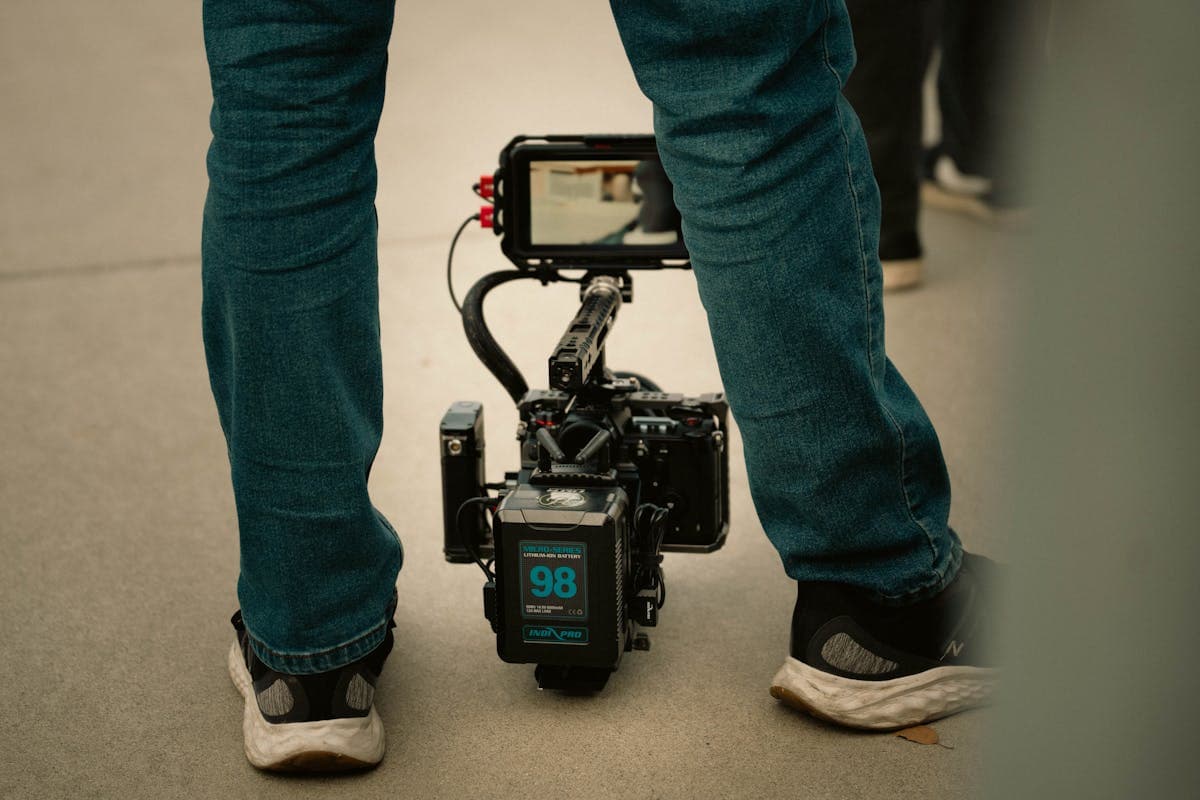
A typical camera operator's kit might contain eight to twelve items worth $15,000 to $30,000 combined. Every time you book a job, you charge one flat kit fee for the whole package. The money goes into your bank account, and from a financial tracking perspective, it just becomes general income.
You might have a vague sense that your camera body is your most valuable item and therefore must be "earning the most." But you've never actually verified that. You don't know if that $2,500 monitor you bought eighteen months ago has earned back even half its cost. You don't know if those three lenses you carry are all pulling their weight or if one of them has barely been used.
The result is that every equipment decision you make, buying, selling, upgrading, is based on intuition rather than data. Sometimes intuition is right. Often it's not.
What most crew members do today
Let's be honest about the state of financial tracking among freelance crew:
Nothing. The majority of crew members do zero equipment-level income tracking. Kit fee income goes into general revenue. Equipment purchases come out of general savings or a business account. There's no connection between the two.
A basic spreadsheet. Some crew members maintain a spreadsheet with their equipment list and purchase costs. A few even try to log income against it. But the manual work of splitting a lump kit fee across items for every single job means the spreadsheet gets abandoned within a few months.
Mental math. "I bought this camera for $6,000, and I charge $750 a day for my kit, and I've probably worked 40 days with it, so... it's probably paid for itself?" This approach is better than nothing but wildly imprecise. You're guessing at the allocation, guessing at the number of days, and ignoring the items in your kit that are dragging down the average.
None of these approaches give you what you actually need: a clear, current picture of each item's financial performance.
What item-level tracking actually reveals
When crew members finally do run the numbers on their kit, the results are almost always surprising. Here are the patterns that show up consistently.
Your camera body pays for itself faster than you think
Camera bodies are the most expensive single item in most kits, so crew members worry about them the most. But because they get the largest allocation of the kit fee (proportional to their value), they also tend to pay for themselves relatively quickly.
A $5,500 Sony FX6 in a $20,000 kit captures about 27.5% of a $750 daily kit fee, roughly $206 per day. At 40 kit fee days per year, that's $8,240 in the first year. The camera pays for itself in about eight months.
That's reassuring. But it's not where the real insights are.
Some accessories have terrible payback
That $800 wireless follow focus you bought because one job needed it? If it's only been on 30% of your shoots, its effective earning rate is much lower than its allocation suggests. Over two years, it might have earned back $300 of that $800. Meanwhile, it sits in your case taking up space on every other job.
Lenses are usually your best investment
Quality lenses depreciate slowly, get used on nearly every job, and carry significant value in your kit fee. A $2,300 lens that's included in every shoot at a $86 daily allocation pays for itself in 27 days of work. After that, it's pure profit. And because lenses hold resale value, even when you eventually sell one, you recoup a large portion of the original cost.
One or two items carry the entire kit
In most kits, two or three items account for 50% to 60% of the total value and therefore earn the most kit fee income. The remaining five to eight items split the other 40%. This means your core items are subsidizing your peripheral items. That's not necessarily a problem, but you should know which items are doing the heavy lifting.
Real examples of surprising findings
Here are scenarios based on common kit configurations that illustrate what tracking reveals.
The monitor upgrade that didn't make sense. A camera operator upgraded from a $700 SmallHD monitor to a $2,500 SmallHD Cine 7. The old monitor had already paid for itself three times over in two years. The new one increased the kit value by $1,800 but didn't increase the kit fee at all. At the same daily rate, the new monitor's payback timeline stretched to 18 months. A $700 monitor earning the same allocation would have paid for itself in five months. The upgrade was nice to have, but financially, it was a step backward.
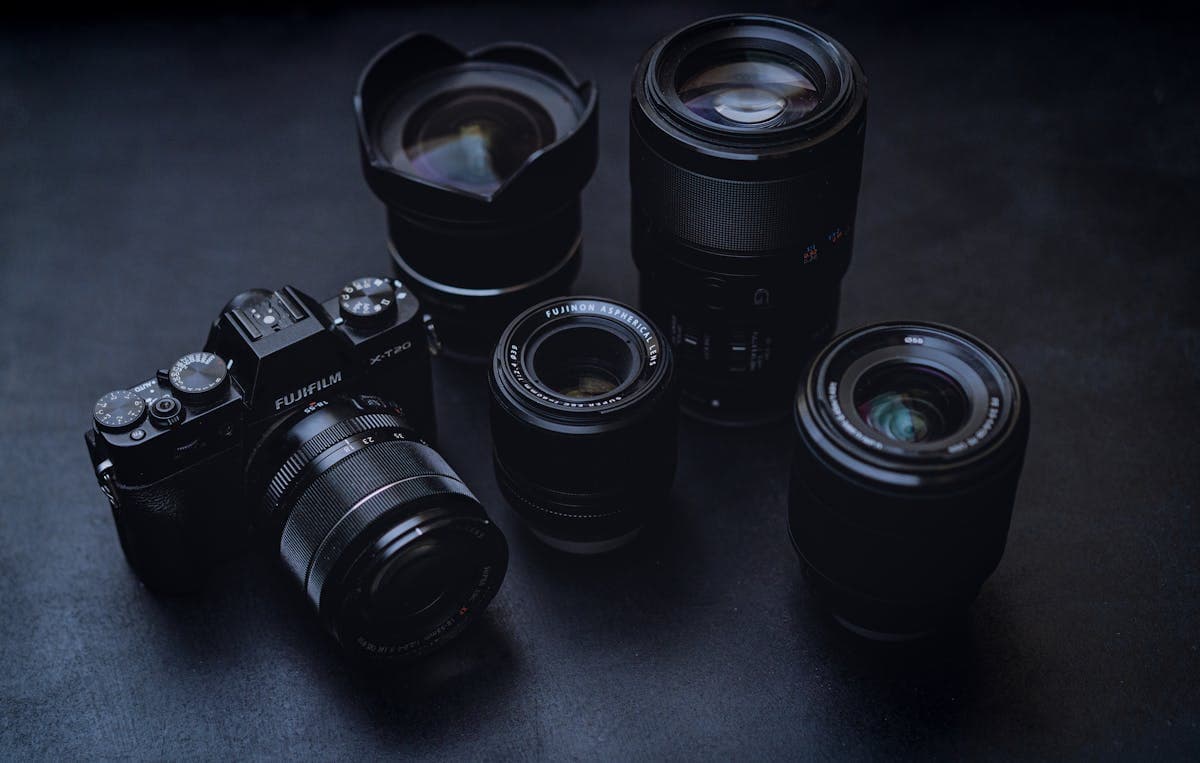
The lens nobody noticed. A camera op carried a 16-35mm wide zoom in their kit for three years. On closer analysis, they only used it on about 25% of their shoots. Most of their work was interview and corporate content where the 24-70mm covered everything. The wide zoom had earned back only 60% of its cost over three years. Selling it and renting it for the occasional wide-shot job would have saved money and simplified the kit.
The grip gear that prints money. A gaffer tracked their C-stand collection and found that a set of twelve C-stands purchased for $1,800 total had earned an allocated $4,200 in kit fees over 18 months. Payback: 233%. The stands required zero maintenance, never needed replacing, and showed up on every single job. Dollar for dollar, they were the best investment in the entire kit.
How this changes purchase decisions
Once you have item-level payback data, your entire approach to buying gear shifts.
Before a purchase: You can model the expected payback before you buy. If a new item would add $3,000 to your kit value but wouldn't increase your kit fee (because the market won't bear a higher rate), you can calculate exactly how long it will take to earn back that $3,000 through kit fee allocation. If the answer is three years and the item will be outdated in two, that's a bad purchase.
After a purchase: You can track whether the new item is meeting your projections. If you expected a new lens to pay for itself in 12 months and it's only at 40% after 10 months, something is off. Maybe you're not using it as much as you planned, or maybe you should adjust your kit fee.
Before selling: You can see exactly how much an item has earned and compare that to its current resale value. An item at 150% payback with a $500 resale value is clearly a keeper. An item at 60% payback with a $1,200 resale value might be worth selling to free up capital for something that earns faster.
When setting your kit fee: Real payback data gives you confidence when pricing. If your numbers show that your kit needs a $650 daily fee to break even within 18 months, you know that accepting $400 is a losing proposition. The kit fee pricing guide covers how to set and justify your rate with this kind of data behind you.
The spreadsheet problem
Some crew members try to do this in a spreadsheet. It works in theory, but it requires maintaining an equipment inventory, logging every job, running allocation formulas, and updating running totals. Setting it up takes a couple of hours. Maintaining it takes five to ten minutes per job. Over 40 to 60 jobs per year, that adds up. The moment you skip a few entries, the data becomes unreliable and the whole exercise collapses.
Most people need a system that captures the data with less friction.
How Rental IQ handles kit fee tracking
Rental IQ automates this entire process with built-in ROI analytics. You define your kit, enter purchase costs, and log your kit fee income. The platform handles allocation, payback calculations, and trend tracking automatically.
You get item-level payback percentages that update with every logged job, earning trends that show whether an item's payback is accelerating or slowing, and portfolio-level analytics via the revenue dashboard that show the overall health of your kit investment. When you're considering a new purchase, you can model its impact before you commit.
Starting today
You don't need software to get started. You can run a basic payback analysis right now with a calculator and your last year of invoices.
- List every item in your kit with its purchase cost
- Add up the total kit value
- Calculate each item's share of the total (item cost divided by total value)
- Count your kit fee days over the past 12 months
- Multiply each item's daily allocation by your total days
That gives you a rough payback number for each item. It won't be perfectly precise, especially if your kit composition changed during the year, but it will be revealing.
If the numbers surprise you, that's the point. Most crew members discover that their intuition about which items are performing well doesn't match reality. And once you see the real numbers, you start making better decisions about what to buy, what to sell, and what to charge.
The crew members who treat their kit as a tracked investment, rather than just a pile of gear, are the ones who build portfolios that consistently earn their keep. Start tracking, and start making decisions based on data.